Real Zimbabwe 100 Trillion vs Gold Foil Replica (2026)
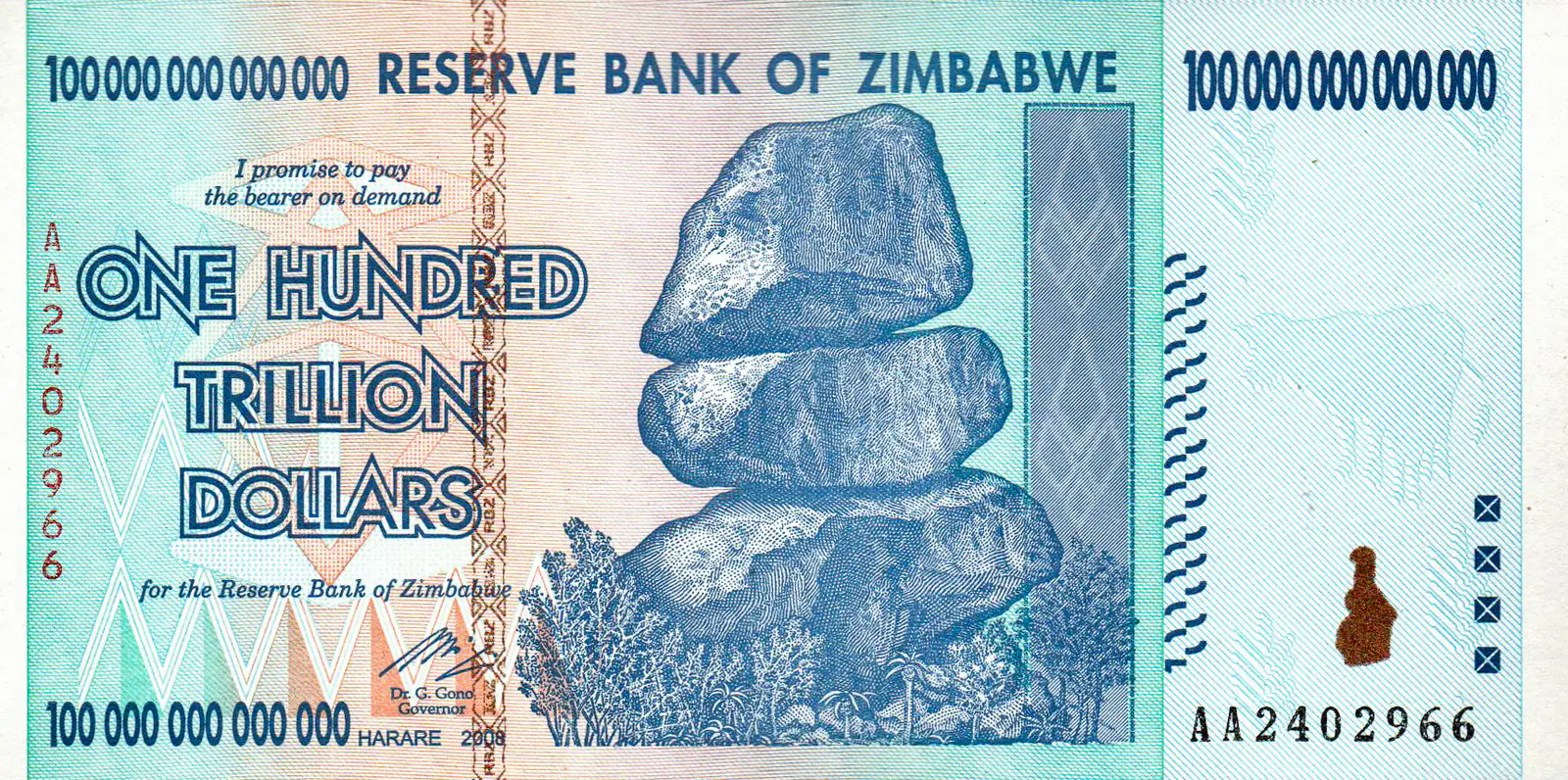
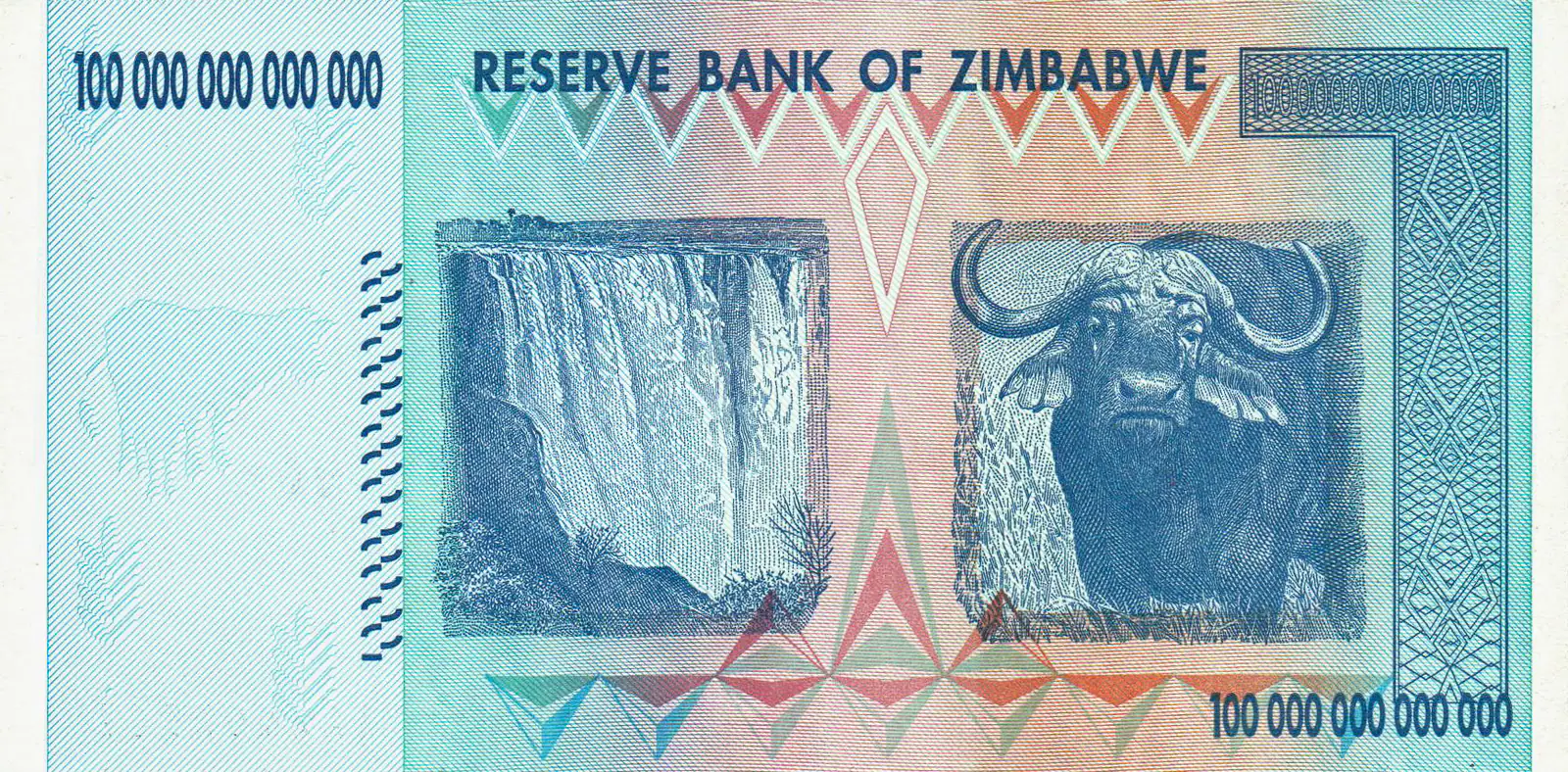
A genuine Zimbabwe 100 trillion dollar note (Pick P-91) is printed on cotton banknote paper and works out to $89 per raw uncirculated note at Planet Banknote in October 2026 ($178 for two notes, buy one, get one free). The shiny gold foil "100 trillion" pieces sold online are novelty replicas, not banknotes and not legal tender: they were never printed by the Reserve Bank of Zimbabwe and are worth a few dollars at most. Material settles it in one touch, paper versus foil.
Last updated: October 2026
Genuine P-91 vs gold foil replica: side by side
Every row in this table is a check you can run in hand. A genuine note passes all of them; a foil replica fails the very first one and every one after it.
| Check | Genuine 100 trillion (P-91) | Gold foil replica |
|---|---|---|
| What it is | A banknote dated 2008, released in January 2009 by the Reserve Bank of Zimbabwe and withdrawn in April 2009 | A novelty souvenir; never printed by the Reserve Bank of Zimbabwe, not a banknote and not legal tender |
| Material | Cotton-based banknote paper with a firm, slightly coarse feel | Metallic foil or plastic, often gold, silver, or blue all over |
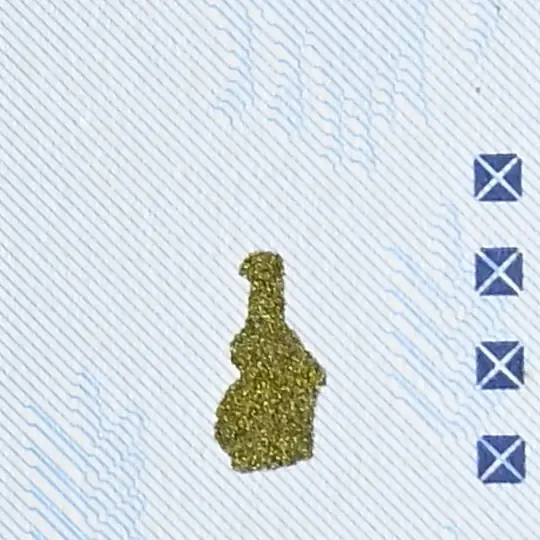
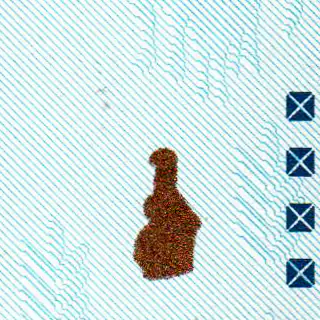
| Zimbabwe Bird tilt test | The bird in the lower right of the front shifts between gold and bronze tones when tilted, printed in optically variable ink | Static; the bird is part of the foil print and shows a single flat color at every angle |
| Gold RBZ security stripe | Patterned stripe down the left of the front with metallic sheen and crisp repeating RBZ lettering | Rendered flat within the foil, with mushy or missing lettering |
| UV blacklight | Fluoresces in a dark room: blue body and yellow center panel | No reaction |
| Serial numbers | Red and black, raised intaglio ink you can feel, two-letter prefix with AA most common | Flat, and often identical across every "different" piece |
| Fine detail under a loupe | Crisp fine-line patterns and border detail at 10x | Coarse foil stamping that dissolves under magnification |
| Certificate included | Free Certificate of Authenticity from Planet Banknote, or a verifiable PMG / PCGS certification number | A printed "certificate of authenticity" that certifies only that you bought a souvenir |
| Honest value | Collectible: $89 per UNC note ($178 for two notes) at Planet Banknote current retail, October 2026 | A few dollars at most, as a novelty; no numismatic value beyond novelty |
Planet Banknote current retail, October 2026. Prices change with inventory and market conditions.
What exactly are the gold foil "100 trillion" pieces?
They are souvenir replicas, sold openly on Amazon, eBay, and Etsy, whose own listings describe them as "novelty replica currency" made of foil or plastic. They copy the look of the famous note without being currency at all.
The Reserve Bank of Zimbabwe never printed foil money. Genuine Trillion Series notes are cotton banknote paper, printed with a short list of real security features. The foil pieces borrow the design, add a metallic shine that the real note never had, and frequently ship with their own printed "certificate of authenticity," which certifies only that you bought a souvenir. Some go further and invent denominations that never existed, such as the "yottalillion" notes seen in eBay listings.
Sold honestly for a few dollars, they are harmless novelty items. The trouble starts when they are resold or misdescribed as genuine banknotes, sometimes at genuine-note prices, to buyers who have never held the real thing. That gap between a few dollars and $89 per genuine note ($178 for two notes) is exactly what this comparison is for.
How do you tell them apart in 60 seconds?
Touch it first. If the piece is metallic, plastic-feeling, or gold all over, it is a novelty replica and you can stop there. If it is paper, run the tilt, stripe, UV, and serial checks.
- 1. The material check. Genuine notes are cotton banknote paper with a firm, slightly coarse feel. Foil and plastic end the test immediately.
- 2. The tilt test. Tilt the note under a light and watch the Zimbabwe Bird in the lower right of the front. On a genuine note it shifts between gold and bronze tones. No shift means no sale.
- 3. The RBZ stripe. The patterned gold stripe down the left of the front should carry a metallic sheen and crisp, readable repeating RBZ lettering.
- 4. The UV test. In a dark room a genuine note fluoresces under a UV blacklight; foil replicas show nothing at all.
- 5. The serial feel. Genuine red and black serial numbers are printed in raised intaglio ink you can feel with a fingertip, in a consistent font with a two-letter prefix. AA is the most common prefix on P-91.
One check to skip: the watermark. Published sources conflict on whether the note carries one at all, and the trillion series was printed without modern security features such as a watermark, so what you see against the light proves nothing either way. The full step-by-step routine, including paper reprints, is in our real vs fake guide, with every feature tabulated in the authentication reference.
What is each one worth in 2026?
A genuine 100 trillion starts at $89 per raw uncirculated note ($178 for two notes) and climbs to $367 for PMG 68 EPQ in the ladder below. A gold foil replica is worth a few dollars as a novelty, whatever its listing claimed.
| Genuine P-91 grade | Certifier | Planet Banknote current retail |
|---|---|---|
| Raw UNC (AA prefix) | Uncertified | $89 per note ($178 for two notes) |
| 66 Gem UNC EPQ | PMG | Sold out |
| 67 Superb Gem UNC EPQ | PMG | $229 |
| 68 Superb Gem UNC PPQ | PCGS | $329 |
| 68 Superb Gem UNC EPQ | PMG | $367 |
Planet Banknote current retail, October 2026. Prices change with inventory and market conditions.
The gap is the whole story. Grade moves a genuine note by $38 to $140 per step; being foil moves a piece from tens or hundreds of dollars to pocket change. The full grade-by-grade ladder, including the $7,200 100-note consecutive bundle, lives in our 100 trillion price index and value guide, and the grading scale itself is explained in the banknote grading guide.
Is a gold foil note a counterfeit?
Not in the usual sense. Foil pieces are sold openly as souvenirs rather than passed off as currency, so they are replicas, not counterfeits. The dangerous fakes are paper reprints that try to look genuine.
A foil replica announces itself the moment you touch it. A modern paper reprint is the fake that can survive an online photo: right size, right design, printed on paper. In hand it still fails the same checks the foil does, just less obviously: a flat single-color Zimbabwe Bird with no shift when tilted, no glow or a wrong bright-white glow under UV, smooth flat serial numbers, and fine-line patterns that blur under magnification. If you are evaluating a paper note rather than a foil one, work through the real vs fake guide before you pay.
How do you buy a genuine 100 trillion note?
Two safe routes: a note already certified by PMG or PCGS with a verifiable certification number, or a raw note from a source-first dealer that inspects its stock and ships a Certificate of Authenticity.
PMG and PCGS authenticate every note before grading it on the 1 to 70 scale and sealing it in a tamper-evident holder. You can verify any holder yourself in seconds: enter the certification number at pmgnotes.com/certlookup for PMG or pcgs.com/cert for PCGS and confirm the description matches. Browse certified examples in our graded banknotes collection.
For raw notes, sourcing is the safeguard. Planet Banknote sources direct from mints, central banks, and authorized distributors, so replica pieces never enter our pipeline, and every note passes the Planet Banknote Verified inspection, including the tilt, UV, and raised-ink checks above, before it is listed in our Zimbabwe collection. The history behind the note is told on our Zimbabwe hyperinflation page.
Frequently asked questions
Are gold foil 100 trillion dollar notes worth anything?
Only as souvenirs. Gold, silver, and colored foil "100 trillion" pieces are novelty replicas sold on Amazon, eBay, and Etsy. They were never printed by the Reserve Bank of Zimbabwe, they are not banknotes or legal tender, and they have no numismatic value beyond novelty, typically retailing for a few dollars.
Did the Reserve Bank of Zimbabwe ever issue gold foil banknotes?
No. Genuine Zimbabwe Trillion Series notes, including the 100 trillion (Pick P-91), are printed on cotton-based banknote paper with a firm, slightly coarse feel. Anything metallic, foil, or plastic is a modern novelty item, no matter what design it copies or what certificate it ships with.
My gold foil note came with a certificate of authenticity. Does that make it real?
No. The printed certificates packed with foil replicas certify only that you bought a souvenir, not that you own a banknote. A meaningful certificate is either a Certificate of Authenticity from a named, reachable dealer or a PMG or PCGS certification number you can verify on the grading service's own website.
What is the fastest way to tell a real 100 trillion from a replica?
Touch it, then tilt it. A genuine note is cotton banknote paper, and the Zimbabwe Bird in the lower right of the front shifts between gold and bronze tones when tilted under a light, because it is printed in optically variable ink. A foil replica feels metallic or plastic and its bird stays one flat color at every angle.
What is a genuine Zimbabwe 100 trillion note worth in 2026?
At Planet Banknote current retail in October 2026, a raw uncirculated AA-prefix example is $89 per note ($178 for two notes), a PMG 67 EPQ example is $229, a PCGS 68 PPQ example is $329, and a PMG 68 EPQ example is $367. Prices change with inventory. A gold foil replica, by contrast, is worth a few dollars as a novelty.
Planet Banknote is a family-owned dealership in Sarasota, Florida, founded in 2021. Every note is sourced direct from mints, central banks, and authorized distributors, inspected through our Planet Banknote Verified process, and ships with a free Certificate of Authenticity. US orders ship free via USPS Priority, and every order includes a free bonus gift.
Holding a paper note you are still unsure about? Run the full checklist in the real vs fake guide, or skip the guesswork entirely with a certified note from our graded banknotes collection.